
When it comes to making it into your 90s, booze( alcohol ) actually beats exercise, according to a long-term study.
Hi, to all you sake and wine lovers out there, how’s your liver holding up?
I’m such a “wine lover” that just hearing the word “alcohol”—or rather, “wine”—makes my mouth water.
Therefore, this is a very welcome blog for me.
After all, drinking is said to be better for longevity than exercise—though that’s only true if you’re still enjoying life at 90 or older, of course.
And since we now live in a blessed era where we can live to be 100 or even older, let’s acquire the right knowledge and lifestyle habits so we can stay spry and healthy right up until our final moments.
So why can we say that “alcohol is better than exercise when it comes to longevity”?
I would like to present two empirical findings regarding “alcohol consumption” and “exercise.”
No.1 In this study, led by Dr. Claudia Kawas, a neurologist at the University of California, researchers tracked 1,700 people aged 90 and older who were enrolled in the “90+ Study,” which began in 2003,to investigate the impact of daily habits on longevity.

According to the British newspaper *The Independent*, researchers found that participants who drank about two glasses of beer or wine a day had an 18% lower risk of premature death.
Meanwhile, participants who exercised for 15 to 45 minutes a day reduced that risk by 11%.
“While we can’t provide a clear explanation, we are confident that moderate drinking leads to longevity,” Dr. Kawas said last weekend at the annual meeting of the American Association for the Advancement of Science (AAAS) in Austin, Texas.
Other factors promoting longevity, including body weight, were also identified. Participants who were slightly overweight—though not obese—reduced their risk of premature death by 3%.
“Being thin when you’re young isn’t bad, but being thin as you get older is very bad,” Dr. Kawas pointed out in his presentation.
Participants who spent two hours a day immersed in a daily hobby had a 21% lower risk of premature death, while those who drank two cups of coffee a day reduced that risk by 10%.
Further research is needed to clarify how habits influence longevity beyond genetic factors.
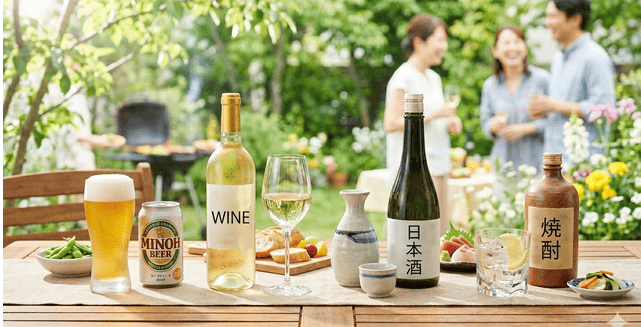
Alcohol and the Body: It’s important to be aware of the following points regarding the effects of alcohol on health.
★ Key Findings from the 2020s
The Association Between Alcohol Consumption in Old Age and Longevity (2020: Dutch Cohort Study) A large-scale study investigating the probability of living to age 90.
It was reported that people who drank 5–15 grams of alcohol per day (slightly less than one small bottle of beer or one glass of wine) had a higher probability of living to age 90 compared to those who did not drink at all.
However, it has also been confirmed that “binge drinking”—consuming large amounts of alcohol at once—significantly shortens life expectancy.
★ Contemporary Assessment of the Effects of Exercise (Consensus of the 2020s)
Professor Kawasu’s 2018 study garnered attention for stating that “alcohol consumption (18% reduction) lowered the risk of death more than exercise (11% reduction).”
However, recent meta-analyses involving tens of thousands to hundreds of thousands of participants have consistently confirmed a remarkably high benefit: people who maintain moderate exercise (such as brisk walking) for 15–30 minutes a day see their risk of premature death decrease by nearly 20%–30%.
★ The Reverse Causality: “You Can Drink Because You’re Healthy”
People over 90 who can enjoy two glasses of wine every day are very likely to be “people who were already extremely healthy and socially connected”—those with strong digestive systems, free of illness, and who drink while chatting with friends.
In other words, it is widely believed that alcohol did not make people healthy; rather, there is a strong element of “survivor bias”—meaning only healthy people were able to continue drinking.
No. 2 This graph compares how much “lack of exercise” and “alcohol consumption” shorten life expectancy (increase the risk of death). The higher the number, the greater the risk of premature death and the shorter the life expectancy.
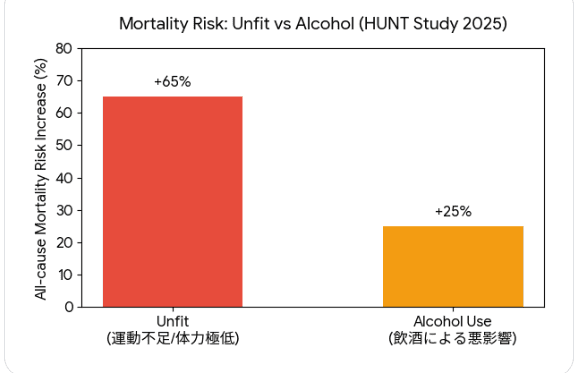
Specific Data and Evidence from the Study According to the world’s largest health survey (the Norwegian HUNT Study, which tracked approximately 24,000 people for 17 years) published in December 2025, the following surprising results were found.
Increase in mortality risk due to alcohol consumption: Approximately +20–25% Increase in mortality risk due to lack of exercise (bottom 20% in physical fitness): Approximately +65% So what does this mean?
It means that the negative effects of not exercising at all and losing physical fitness are overwhelmingly greater (about three times greater) than the negative effects of drinking alcohol.
The study also found that “people who drink alcohol regularly but exercise regularly to maintain their physical fitness live longer than those who neither drink nor exercise.”
“Risk of shortening lifespan: Lack of exercise > Alcohol consumption” (i.e., not exercising shortens your lifespan more than drinking alcohol).
Therefore, it’s fair to say that continuing to exercise regularly while enjoying alcohol in moderation is more likely to lead to a longer overall lifespan than completely giving up alcohol (abstaining).
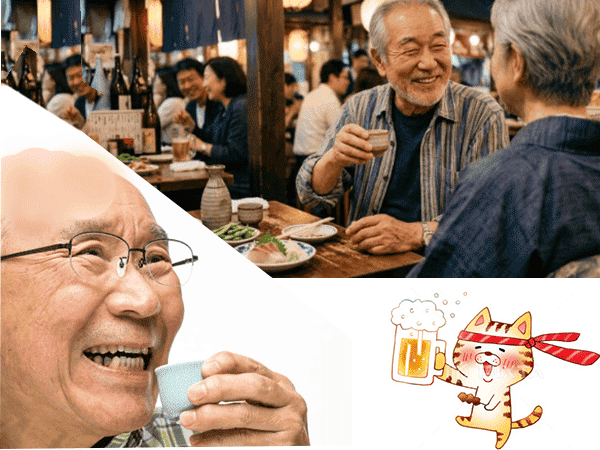
What determines alcohol tolerance?
We all know as a matter of course that “some people can hold their liquor while others cannot.”
During the year-end and New Year’s season, many people share drinks with family, friends, and coworkers, but even when drinking the same amount, “how drunk one gets” varies from person to person.
Some people turn bright red after just a small amount of beer, while others can drink beer, wine, and sake in large quantities without any ill effects.
What exactly determines this?
If you study medicine, you can gain some insight into the answer. It comes down to differences in the efficiency of alcohol metabolism.
★ How Alcohol Is Metabolized
The human body has a natural mechanism for breaking down and metabolizing alcohol.
Alcohol ingested into the body is absorbed through the stomach and small intestine and broken down in the liver.
First, alcohol is converted into acetaldehyde by the enzyme alcohol dehydrogenase.
Acetaldehyde is the substance responsible for “hangovers,” and when it accumulates in the body, it causes unpleasant symptoms such as nausea and headaches.
Next, acetaldehyde is converted into harmless acetic acid by acetaldehyde dehydrogenase.
Finally, acetic acid is broken down into carbon dioxide and water and excreted from the body.
This is why, on days when we suffer from a terrible hangover, we always resolve to “never drink again,” yet end up enjoying a drink once more just a few days later.
People Who Can Handle Alcohol and Those Who Can’t
Now, in fact, there are two types of acetaldehyde dehydrogenase (ALDH), which breaks down acetaldehyde: type 1 (ALDH1) and type 2 (ALDH2).
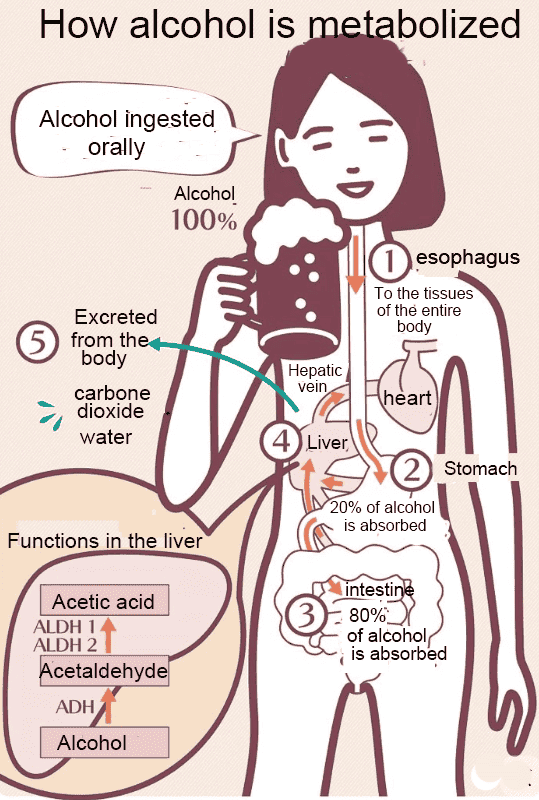
The strength of type 2’s function is determined at birth by the type of gene a person inherits from their parents.
People with weak or absent ALDH2 activity (low-activity or inactive types) tend to accumulate acetaldehyde in their bodies and are more likely to experience unpleasant symptoms.
This is because they cannot break down acetaldehyde efficiently. This type is generally considered to be a “light drinker.”
Some people believe that “even light drinkers can become heavy drinkers with practice,” but this is a misconception.
This is because genetic traits cannot be altered through training.
While symptoms may become milder with some degree of acclimatization, the health risks remain unchanged.
Naturally, it is strictly forbidden to force someone who cannot drink to do so, or for such a person to try to drink out of a sense of obligation.
How to Stay Healthy and Live a Long Life Even While Continuing to Drink
★ The Close Relationship Between Alcohol and Brain Cells
When it comes to alcohol, it has no particular nutritional value and isn’t considered essential for the body, yet it’s a luxury item people enjoy to relieve stress or simply because they like it.
While some people are enthusiasts of such luxury items, others have absolutely no interest in them. So, is it actually beneficial or harmful? Let’s consider its impact on longevity.
First, many Japanese people lack the enzymes needed to break down alcohol. For these individuals, drinking alcohol is undoubtedly harmful.
While we don’t hear it much anymore, not long ago there were people who would pressure others with baseless claims like, “If you keep drinking, you’ll get used to it,” or “If you keep drinking, you’ll become more tolerant of alcohol.” This is practically attempted murder.
As for everyone else—from those who can drink moderately to heavy drinkers who can drink as much as they want—while the level of alcohol metabolism varies from person to person, one thing is the same for everyone: when you drink alcohol, it is broken down in the liver to form the toxic substance acetaldehyde.
Acetaldehyde is produced, and when it is further converted by enzymes, it becomes acetic acid, which is ultimately broken down into carbon dioxide and water and excreted from the body.
If this breakdown process is slow, it leads to feeling sick from drinking or suffering from a hangover.
★ Alcohol destroys brain cells
This is the crucial part: acetaldehyde destroys brain cells. While there is no data specifying exactly how many brain cells are destroyed by a given amount of alcohol, it is certain that brain cells are dying when you have a headache from a hangover.
If you find yourself saying, “I drank so much I don’t know how I got home,” or “I have no memory after a certain point,” you have lost a vast number of brain cells.
Brain cells are regenerated through stimulation, but lost brain cells do not return instantly. It’s easy to lose them, but it takes time to replace them.
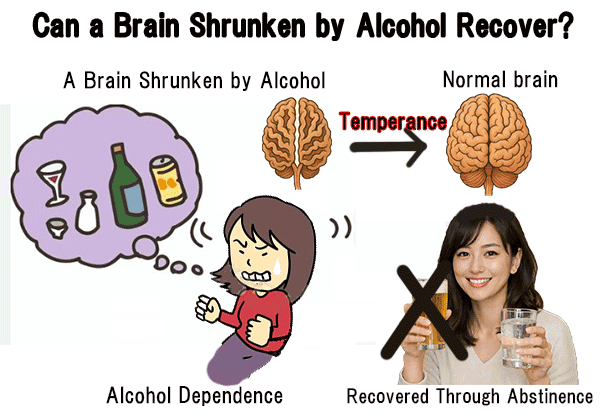
With this in mind, I don’t think there’s anything wrong with “enjoying a beer after work,” “drinking whiskey to ease tension and relax,” or saying “the combination of fried chicken and chuhai is the best!”—as long as you’re drinking for pleasure.
However, you should probably stop drinking “unpleasant alcohol” at social gatherings you don’t really want to attend, starting today.
The saying“Alcohol is the king of all medicines” has long been used to praise the benefits of alcohol.
It is said to originate from a phrase recorded in the ancient Chinese historical text *The Book of Han*, which means that “moderate drinking has health benefits that surpass even the best medicines.”
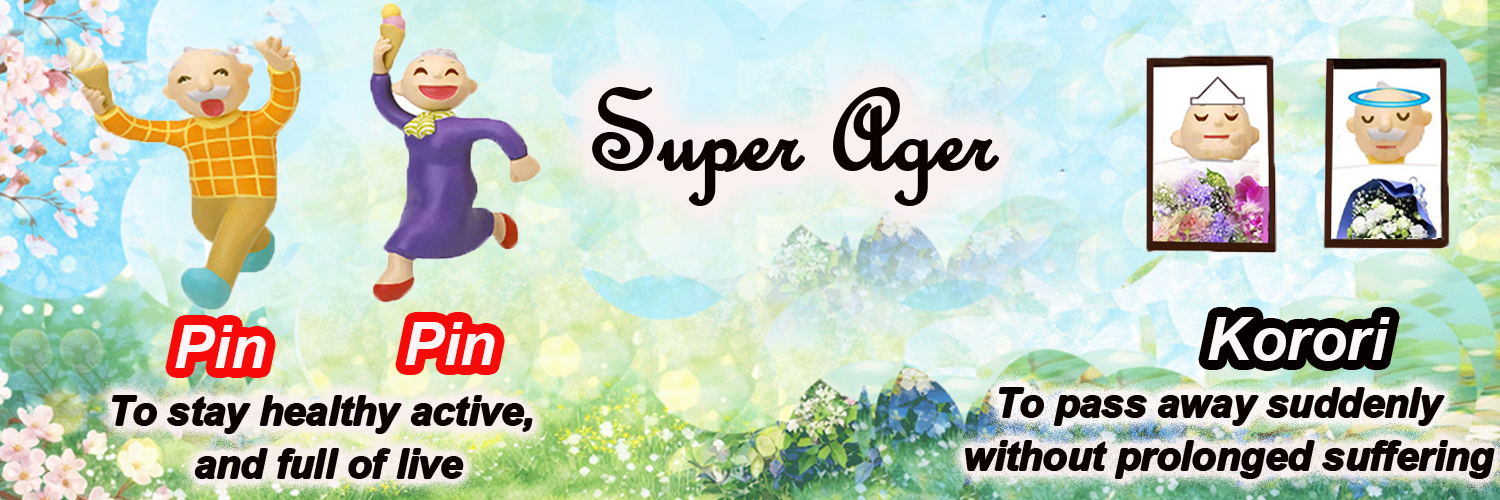
While appreciating this wise saying for us drinkers,let’s strive for moderation. Since we live in an era where we can live long lives, let’s stay spry and healthy(pin-pin) until the very end(korori).
I’d like to introduce this occasion, that is “Chambertin” that’s my favorite wine as followed,
『Wine loved by Napoleon !』
Napoleon Bonaparte was well known the fact that he was Emperor of the France, who dominated continental European after he won most of many wars and the vast majority of his battles.
And this is also well known the episode that Chambertin wines were Napoleon’s favorite and
it is said that he insisted that they be available to him even during his various military campaigns.

According to a historian, the Chambertin was the only wine Napoleon drank during his reign as Emperor.
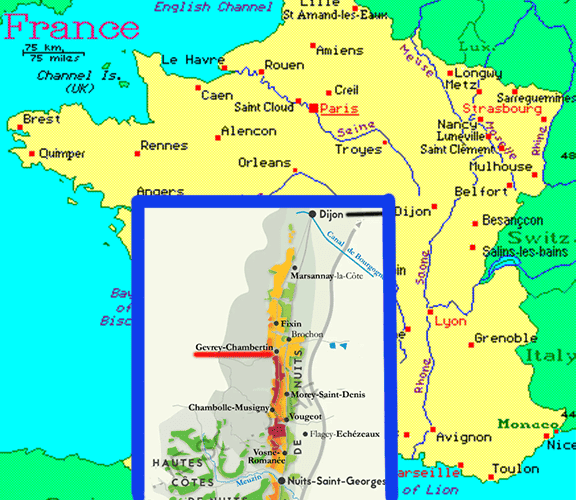
Gevrey-Chambertin is the largest wine-producing village in Burgundy’s Cote d’Or (the hill of gold) and this is one of the most prestigious and revered names in Burgundy, often referred to as ‘the king of Burgundy’, due to the richness, masculinity, and power of the best of the wines.

Chambertin is an Appellation d’origine controlee (AOC) and Grand Cru vineyard for red wine in the Cote de Nuits subregion of Burgundy, with Pinot noir as the main grape variety.
Chambertin is located within the commune of Gevrey-Chambertin, and it is situated approximately in the centre of a group of nine Grand Cru vineyards all having “Chambertin” as part of their name.
Their prices differs depending on the factors such as the vintage year, the name of vineyards and the name of producer, bottler and so on.
A Votre Sante !
Un repas sans vin est un jour sans soleil(A meal without wine is a day without sun)
(This is just a personal aside, but after more than 50 years of an almost obsessive love for wine, I now find myself suffering through a veritable hell of gout the morning after I’ve impulsively downed a beer. Lately, I haven’t even been able to enjoy the sun—it’s been nothing but cloudy, or rather, rainy days. To all you wine lovers out there, please do your best to avoid going through this!)